Good fishing trips don’t just happen by chance. Anglers who manage to catch fish and keep them in their coolers or release healthy ones back into the water do not rely on good luck alone. Good planning leads to successful fishing trips. Effective planning is what helps you to differentiate between enjoying a peaceful day on the water and a disappointing one.
Knowing how to plan a fishing trip begins long before loading the vehicle. It starts with identifying the kind of trip you want to go on. Surf fishing in a secluded bay has a world of difference from going 40 miles into the open sea. The equipment needed, clothes required, weather conditions and measures to ensure your safety vary greatly for each.
The guide covers all aspects of planning a fishing trip – from checking the current types of licenses needed to preparing the necessary gear and wearing suitable clothes. Read through this before your next fishing trip, and you’ll be confident and ready to set off from the dock!
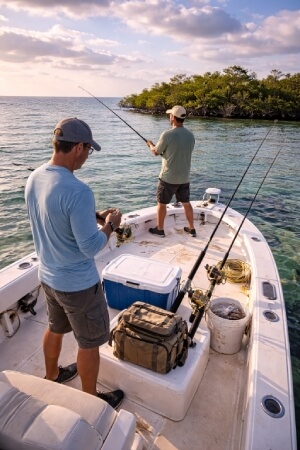
Before starting any preparations, identify the type of trip you have planned. Coastal fishing and offshore fishing require different gear, preparation strategies and expectations. Finding out about the type of fishing trip you have planned will help you make all the other decisions required for the same!
Coastal fishing and inshore fishing planning is relatively easier compared to deep sea fishing. You will be fishing in areas such as bays, estuaries, mud flats and near shore reefs, typically within a few kilometers of the coast. These calm and shallow spots provide ideal opportunities to try out light tackle and go on short fishing trips.
Coastal fishing is also fairly easy to try out as a beginner. You can try fishing from kayaks, small boats or wade in the water. Most fishing trips are short day excursions, and you’d have more flexibility to adapt to changing weather conditions compared to deep sea fishing.
Planning to go deep sea fishing involves good amount of preparation. You would be heading out into the vast open ocean (30-60 miles from the shore) targeting strong fighting species such as tuna, mahi-mahi, wahoo and marlins. Deep sea fishing requires a lot of physical effort and comes with a risk of bad weather.
Your list of offshore fishing gear must include strong conventional rods, powerful reels, 50-80 pounds of braided line and robust terminal tackle. Good weather windows are crucial in offshore fishing. Many of the first-time anglers who wish to go offshore fishing book a trip with a licensed angling charter instead of going out on their personal boat.
Weather is the key factor in any fishing trip – and most anglers check it far too late. Experienced anglers keep an eye on the weather forecasts three to five days prior to their trip, and not just on the morning of. The weather conditions vary greatly between shore based and deep sea fishing areas, hence we require suitable weather forecasts for the specific waters we plan to fish from.
For information about fishing weather, avoid general weather apps and opt for marine weather forecasts. NOAA’s marine weather forecast (weather. gov/marine) breaks down current conditions by coastal and offshore areas. Windy and Windguru provide detailed wind and wave forecasts that are popular among experienced anglers.
When examining any marine weather forecast, focus on wind speed and direction – any winds between 15 to 20 knots will create challenges for smaller boats – along with wave heights, swell periods and barometric pressure trends. A decreasing barometer can lead to strong feeding behaviors but can also signal approaching bad weather. Understand the differences before deciding to head out!
The habits of fish are closely linked to the environment. Rising barometric pressure after a storm brings increased fish activity. Steady pressure leads to calm and consistent behavior. Sudden drops in pressure create brief, intense periods of feeding before fish settle down to rest awaiting approaching weather.
For tides for fishing, areas of moving water provide good opportunities to catch fish from shallow bays. Incoming or outgoing tides concentrate baitfish and drive predators out of structures like reefs and rocks. Head out to enjoy good fishing spots during the first couple of hours of strong tidal movements. Dawn and dusk offer reliable feeding times for various fish species regardless of the water body.
Get your paperwork organized before even loading your rod. Licensing requirements differ by state, water type and species – and fishing without a valid license can result in severe fines. Boat trips require additional permits that many anglers don’t realize they need when heading out to sea for the first time.
State fishing licence requirements vary greatly. Most states issue freshwater and saltwater licences separately. Non-resident anglers are generally charged higher fees than residents. Many states offer day licences – ideal if you plan to visit and go fishing just once.
Children aged 16 and below and seniors are entitled to exemptions or reduced fee charges in many states. To find out how to obtain a fishing licence in your state, visit takemefishing. org, which provides links to all state fisheries department websites. Purchase one before leaving home and save a digital copy of your licence in case you lose network coverage while fishing!
Angling in federal waters or targeting highly migratory species such as tuna, swordfish or certain species of sharks requires additional federal permits in addition to the usual state saltwater fishing licence. If you are going on a charter trip, the captain’s federal Highly Migratory Species Permit provides cover for all passengers on board; but do check with your tour operator!
Bag limits and minimum size restrictions vary by species and are seasonal. Check NOAA Fisheries (fisheries. noaa. gov) or your state agency before heading out on the water. Finding out about any of these after you have caught a fish is not ideal.
Have equipment suitable for the types of fish you are trying to catch – and not just anything that fits in the truck. Having too much gear can be as frustrating as having too little when you need to maneuver through tight spaces in a small boat. Create a focused, trip-specific gear list and stick to it!
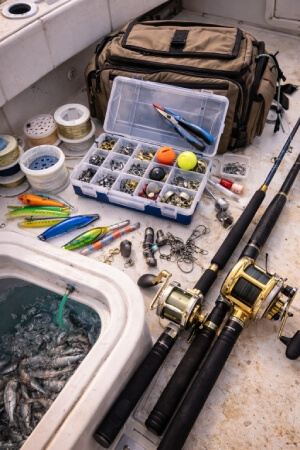
Making a fishing gear checklist begins with choosing rods and reels. A 7-foot medium action spinning rod can handle most of the inshore fish well. Going offshore requires heavier action conventional gear able to deal with long, strong fights.
If you are a newbie, a medium action spinning outfit provides good versatility to deal with a variety of situations. Line: Braided lines provide good sensitivity and thin diameters for going deep; Monofilament lines provide good stretch and elasticity when fishing in areas with structures; Fluorocarbon lines are almost invisible under water and can be used as leaders. Choose your fishing gear according to the place and type of fish you intend to catch!
Prepare your rods the evening before. Your terminal tackle – hooks, swivels, sinks, floats, leader material, etc. – should be organized by size in a tackle box compartment so you can find everything needed quickly when the fish are biting strongly. Keep a few extra hooks and a spare spool of line on hand. A second rod is a good investment for longer trips – even if it takes up a little more storage space.
These items are not accessories – they provide important backup for the gear we know will fail at the worst possible moment.
Live bait outperforms artificial lures in low-visibility waters or when fish are selecting their prey. You can purchase live bait at a local tackle shop on the morning of your trip or obtain some yourself beforehand. Provide healthy live bait with a well-aerated livewell maintained at a suitable water temperature. Although soft plastic lures and surface baits often outdo live bait when the fish are active feeders, equip yourself with a good range of both types and let the fish indicate which one works best for you on the day of your fishing trip.
The gear needed to enjoy a good fishing trip includes clothing. Good quality layers of clothing, proper footwear and adequate sun protection do not just ensure comfort but also provide security. Weather conditions can change quickly while you are out on the water, particularly away from shore, and inappropriate dressing can pose challenges!
Layered clothing makes sense for fishing since weather conditions hardly remain stable. Start with a moisture-wicking base layer to draw sweat away from your skin during any physical activity. Add a thermal layer – light, compact fleece jacket or sweater works well – for cool early morning hours.
Good quality, wind-resistant, and water repellent outerwear will complete your attire. Come noon, we would be in our basic tee. Having good clothing to wear while fishing means thinking of all aspects of the day’s outing, not just the initial part of it. We can keep the necessary layers compact without compromising our capacity to manage our fishing equipment.
Ensuring deck safety begins with good footgear. Sports shoes or flip-flops can create skid marks on a deck, getting wet, and boats have decks that remain wet most of the time. Good quality non-slip footwear for fishing includes rubber-soled deck shoes or waterproof fishing boots featuring a tire sole to provide good grip on slippery surfaces.
For beach or wade fishing, good wading boots provide the needed ankle support and grip required to navigate uneven, rugged or sandy bottom areas. When on multi-day trips, carry a pair of clean and dry socks packed in a closed pouch – wet feet lead to blisters in no time, and blisters can bring your fishing trip to an abrupt end.
The amount of sun exposure on open waters is much stronger compared to land areas. The water reflects UV rays upwards towards you while the sun shines down from above – you’re protected from both sides at once.
Apply a sunscreen with SPF 50+ offering broad spectrum protection before setting out and reapply every two hours. Long-sleeve UPF 50 fishing shirts provide better sun care than sunscreen alone and can resist fading away due to spray or sweating. A wide-brimmed hat offers good protection for your face, neck and ears!
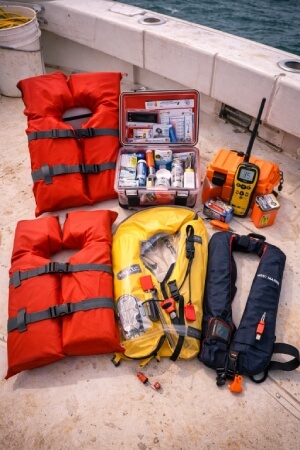
Planning safety measures should be part of every fishing trip – not just big ones involving offshore fishing. Whether you will be fishing from a kayak in a sheltered bay or fishing far out in the sea, having the appropriate gear and creating a basic safety plan is a must!
US Coast Guard rules specify that each person on board a boat must wear a personal flotation device (PFD). Foam PFDs provide good buoyancy with little need for maintenance. Inflatable PFDs can be worn all day comfortably, but require regular checks to ensure that the CO2 cylinder is in good condition and the inflatable bladder holds air.
A fishing first-aid kit should include basic items such as antibacterial wipes, bandages, needle-nose pliers or fish hook remover, pain relief medicines and seasickness medications if planning to venture into open sea waters. Removing fish hooks from skin can be managed by pulling it gently by the thread; however, those close to the eyes or deeply embedded require medical care.
Good fishing trips begin with good preparation – not luck. Now you have the detailed information required to deal with every aspect of fishing.
Start by identifying the nature of your fishing trip (coastal or offshore), check weather conditions 3 days prior to your trip, and obtain necessary fishing licenses before you step out of your house. Create a list of required equipment based on the fish species you want to catch, dress in layers, wear slip-resistant shoes and give sufficient importance to protecting yourself from the sun.
No matter whether you are going for a relaxing day of fishing in the shallow waters or embarking on an expedition into the open sea for the first time, the core principle remains the same – good preparation leads to good fishing. Follow this guide before your next fishing trip, and you’ll be equipped to plan a great fishing trip.