Sport fishing is one of those activities that appears simple from a distance – a fishing rod, line, and hook. However, when we are actually out fishing, we realize that proper gear can make a big difference. Whether you’re trying to catch bass in a nearby lake or going on a deep-sea fishing expedition in open ocean, the gear you choose will determine the success of your day. In this guide, you’ll walk through everything — from choosing the right rod and reel to picking the best fishing line, hooks, lures, and fish handling tools. We’ll also talk about some common equipment to avoid and tips to keep our fishing gear in good condition for years to come.
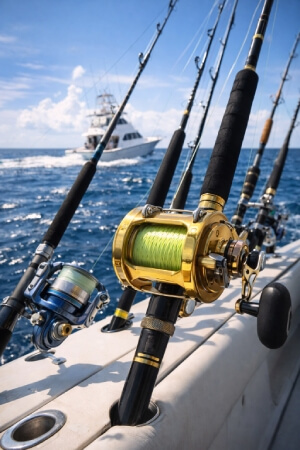
Poor equipment choices result in missing out on catching anything. That’s a harsh reality. A lightweight rod designed to deal with bigger species, a reel with a weak drag system or fishing line that does not cater to your chosen depth of fishing area – any of these factors can lead to a wasted fishing trip even before it begins!
According to the American Sportfishing Association, anglers in the United States invest over $9 billion annually in fishing gear and equipment, highlighting the importance attached to creating good gear setups.
Before you spend a single dollar on fishing gear, it pays to understand why different setups exist in the first place. Sport fishing isn’t one-size-fits-all. The type of fish you’re after, where you’re fishing, and how deep the water is all dictate what gear you actually need.
Before you buy any fishing gear, it is necessary to understand why various types of gear are needed. Sport fishing cannot be done using standard equipment. The type of fish you want to catch, where you want to fish, and the depth of the water you will be fishing in determine the equipment needed.
The size of the hook matters too. A number 2 hook is suitable for catching bass; however, you’ll need a 5/0 or bigger hook to catch sea bass, or species fished offshore. The International Game Fish Association (IGFA) provides guidelines for tackle types used by anglers competing in fishing tournaments – a resource useful for setting up your gear; available on igfa. org.
The water depth affects all of your fishing gear. Fishing spots near the shore and in the surf are relatively easy to deal with – lighter fishing gear can manage most challenges effectively. However, fishing in offshore and deep-sea areas involves strong currents, pressures, and distances that require strong rods and reels.
Increasingly heavier sinker weights are needed to cast deeper waters, and the line capacity of your reel needs to be adequate to deal with long runs by large fish. When deep sea fishing, electric reels and rods rated 80-130lb are commonly used equipment. If you are planning to fish in freshwater rivers or calm, shallow coastal areas, a simple spinning reel and a medium-action rod can serve your purpose.
Understanding the necessary gear any angler needs helps to distinguish productive fishing trips from those filled with frustration. Here’s a breakdown of the six categories of essential fishing gear you should understand before hitting the water.
The fishing rod is the foundation of your setup. Rods are available in various power ratings – ultralight, light, medium, medium-heavy, and heavy – and action ratings describing how far the rod bends (fast, medium, slow). A medium-light spinning rod is perfect for beginner anglers as it offers good flexibility to deal with a variety of fishing methods and species.
Selecting an inappropriate reel for your fishing rod will make you aware of it right away! Spinning reels are the top picks for new anglers and are commonly used by nearshore and freshwater angling fans. Bait casting reels provide better precision and extra line capacity but require more experience to handle.
For deep-sea fishing, conventional reels are the preferred choice, providing sufficient line capacity and strong drag systems capable of catching large pelagic species.
There are three types of fishing lines: monofilament line, braided line and fluorocarbon. Monofilament line is easy to buy, flexible and forgiving – ideal for beginners. Braided line has no elasticity, high sensitivity and a slim diameter allowing for long casts and deep dives.
Fluorocarbon is nearly invisible underwater and is commonly used as a leader between your braided main line and your hook or lure. For saltwater fishing, braided line in the 20-50lb range is adequate for most inshore fishing activities, while boats engaged in deep sea trolling use 80 lb braid or heavier lines.
There are many types of hooks – J-hooks, circle hooks, treble hooks, and more. Circle hooks have been recommended by various conservation societies as they allow for easy catch and release of fish, with the hook being lodged in their mouth.
Swivels help to eliminate line tangles when fishing with live baits or specific lures. Weights help to determine the level of water at which the bait or lure can be cast. A good quality fishing tackle box to keep all required gear, arranged by size and type, helps to keep them organized and within reach.
Good bait or lure selection depends on the context. Live baits such as minnows, worms, and cut baits outperform artificial baits in cloudy water or when fish are inactive. Fishing lures, including soft plastic baits, crankbaits, jigs, and spinnerbaits, allow us to cover large areas of water effectively and induce “reaction bites” from aggressive fish such as bass and pike.
Having a range of lures in various sizes, shapes and actions provides opportunities to increase our chances of catching fish if a particular one is not producing results.
Every angler should keep a net. These help reduce the time spent handling fish and contribute significantly to catch-and-release fishing. Good quality pliers (of the type used for fishing, preferably stainless steel) enable quick and safe removal of hooks.
Polaroid sunglasses provide good glare cut-offs on calm waters, allowing us to see fish and underwater structures – a major asset when fishing on clear lake flats. First aid kits are easily overlooked, but they are essential for all fishing trips, especially when going boating. We deal with sharp hook points and may be fishing in remote areas, so basic wound care items must be included in your tackle box!
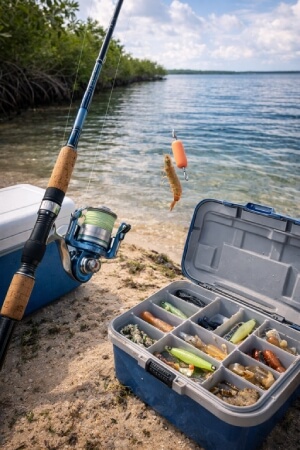
Nearshore and inshore fishing provide great opportunities for most anglers to fish for extended periods of time. Bays, estuaries, flats and coastal rivers -the places to catch fish- require no ‘heavy artillery’ needed for offshore fishing, but good gear can lead to better experiences.
For inshore fishing, a 7-foot medium-action spinning rod with a 2500-4000-size spinning reel provides good stability and flexibility. You can equip it with 20-30 lb braided line along with a fluorocarbon leader and enjoy fishing for species such as redfish, snook, flounder and sea bass in various nearshore locations. The 7-foot medium-action spinning rod and reel combo is ideal for beginners, as it is easy to handle and can be used to try out various types of fishing techniques.
The world of Inshore Fishing offers ample opportunities to try out a variety of Lures and Rigs. Good soft-plastic tail spinners, popping cork rigs and jig heads cover most of the inshore fishing destinations. Live shrimp is one of the best baits available to target nearshore fish species, but a well-placed soft plastic lure can deliver equally good results as live shrimp on several occasions. If you’re planning to fish during low light conditions (early morning), keep some top water baits handy – fishing for surface plugins during early morning hours can lead to good catches!
One advantage of Inshore fishing is that you can start fishing without a boat. You can try Wade Fishing, Kayak Fishing or Bank Fishing, which are effective ways of catching fish. Keep your equipment organized and light. A small tackle box, one rod & reel combination and a cooler are all you need to enjoy a fruitful inshore fishing trip! The key to having a good Inshore fishing experience is to know your fish habitat and make effective use of the gear you have!
Even experienced anglers commit errors with their sport fishing gear. The ones listed below occur frequently and result in losing fish or damaging your equipment during a fishing trip!
The most common error in sport fishing is using light gear to catch big species. A light spinning rod for freshwater fishing can handle a 2-pound tiburon bass perfectly well, but attach a 20- pound cobia to it and something will give way – possibly your rod!
Big fish create enormous forces while fighting, and your fishing gear should be strong enough to deal with their weight and energy. Check the strength of your rod and recommended lure size before attempting to catch bigger fish.
Using heavy offshore tackle for small inshore fish. The flip side to this is using heavy offshore gear for small inshore species. Big tackle dulls your sense of touch and makes it difficult to feel any bites.
Using big rods to catch small species such as trout or panfish is equivalent to cracking open a walnut with a sledgehammer. Choose your gear based on the average size of the fish you expect to catch, not the largest one you want to catch.
Budget reels compromise on the drag system. Unsmooth or irregular drag can cause line breakage when a strong fish makes a sharp run, and this can happen at the most inconvenient moments. Before buying any reel, check out how smoothly the drag runs from maximum to minimum capacity.
A good quality drag system provides consistent and uniform pressure throughout its range. Whether it’s your first-ever spinning reel or an advanced offshore conventional reel, all reels require a good drag system.
Going deep-sea fishing with reels designed for shallower water can lead to frustrations. Deep-sea fishing requires reels with large line capacities – a fish can snap 300 yards of line in seconds, leaving a small reel empty very soon.
Increasing your sinker weight depending on the depth of water helps to create an ideal spot to catch a fish. Research the water depth of the places you plan to go fishing and choose your gear accordingly.
Sport fishing rewards preparation. The right fishing setup — matched to your target species, water depth, and fishing style — gives you a genuine edge every time on the water.
From choosing the suitable rod and reel combo to knowing about the different types of fishing lines, each and every piece of information is important to enhance your sport fishing experience. Don’t ignore the smaller details. A good swivel, appropriately sized hook and neatly organized tackle box with effective baits contribute to successful fishing trips.
After completing your fishing trip, invest some time in maintaining your fishing gear – it helps to protect the investment you have made in buying good quality fishing gear. Every angler must understand that taking good care of their fishing gear is important.
Whether you’re new to sport fishing or looking to upgrade from the equipment you already own, having good gear can help you enjoy a great sport fishing experience.
Knowing how each piece of gear works in sync can lead to a successful sport fishing experience. Fish smart, gear up right, and enjoy your time on the water.