Close your eyes and think of fishing. What is the first thing that comes to your mind? Most probably you see what we see: A boat out in the wide ocean, a group of people sitting on it with some angling rots, joking and talking about the biggest fish they ever caught. And if this is your first idea about fishing, then you are right to deep sea fishing.
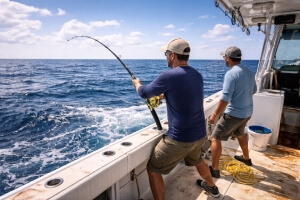
Deep-sea fishing trips are usually longer. Boats travel many miles offshore to reach fishing grounds where migratory fish feed. That requires more preparation. Because of the distance and water depth, anglers use heavier equipment and different techniques than those used near the coast. That’s what really counts:
Deep-sea fishing might not be everybody’s favorite way and it doesn’t have to be. With no doubt, it differs a lot from coastal fishing. One of the number one things is the location. While it happens in open water, mostly several hours away from land, there is no shelter from wind or waves, and weather plays a much larger role. And out of sudden it becomes more like an adventure than a day out fishing.
What is so different to coastal fishing:
In deep-sea fishing, depths can reach hundreds or even thousands of meters. This affects where fish stay and how bait is presented. For anglers, this means that they need strong equipment aside from strong nerves.
These differences make offshore fishing more demanding but also more rewarding; that’s why it makes sense to hang in there.
Deep-sea fishing boats are built for open water, which is why they are larger, heavier, and more stable than coastal boats.
Common features include:
Many boats also carry advanced electronics to locate fish and underwater structures. Comfort matters too, since trips can last all day or longer.
Offshore fishing requires strong and reliable gear. However, it does not necessarily cost a fortune. Combos start at 100 USD, and be sure, you will need it.
Fish in deep water are often large and powerful, and fights can last a long time. Rods are thicker and stiffer than standard fishing rods. Reels are designed to hold large amounts of heavy line. A braided line is often used because it is strong and sensitive.
Other important equipment includes:
With all the excitement, let’s not forget that offshore fishing targets massive fish such as tuna or sailfish Cutting corners when you are going to get your gear would be a fatal decision.
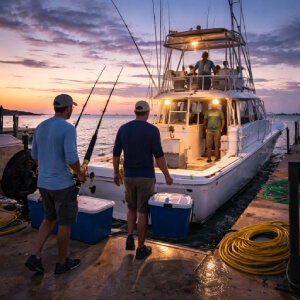
The early bird catches the worm, or, in this case, better said, “The early angler catches the fish.” Deep-sea fishing trips usually start early. To allow enough travel time, boats usually leave before sunrise. Depending on the fishing grounds, the ride offshore can take one to several hours. Before you start your deep-sea fishing trip, ask yourself:
It’s better you don’t have your head in the clouds while preparing yourself. Don’t forget that returning back to the safe zone isn’t that easy once you are out. Proper preparation makes a big difference.
Most offshore trips are guided or charter-based. This helps anglers focus on fishing while the crew handles navigation, safety, and equipment.
Several techniques are used offshore. The choice depends on target species, water depth, and weather conditions.
Deep-drop fishing targets species living near the ocean floor. Heavy weights are used to lower bait straight down.
This technique requires patience. Lines may stay in the water for several minutes before a bite happens. Electric reels are sometimes used because of the depth.
Drift fishing allows the boat to move naturally with the current. Baits are lowered to different depths while drifting over fish-holding areas. This method works well when fish are spread out and not actively chasing lures.
Trolling is one of the most common deep-sea techniques. The boat moves slowly while lures or bait are pulled behind it. This helps cover large areas of water.
Trolling is effective for finding active fish. When the boat slows down or stops so the fight can begin, you’d better pull yourself together. Patterns, speed, and lure distance are adjusted throughout the day.
Deep-sea fishing targets larger and often migratory species. These fish move long distances and follow food sources. If you are wondering which species you may target, then take a look at this overview!
| Fish | Facts |
|---|---|
| Tuna | Strong open-ocean fish up to 680 kg and over 3.8 m in length. You can target these fast swimmers across wide areas of the Atlantic and Mediterranean. |
| Mahi-mahi | Mahi-mahi (dolphinfish) are fast swimmers, and while not as large as tuna, they are lively fighters who are popular with offshore anglers. |
| Marlin | Blue marlin can reach lengths up to about 5 m and weights near 818 kg; they are widely distributed in deep tropical and temperate waters. |
| Swordfish | Swordfish typically grow to about 3 m in length, with some reaching over 4.5 m and weights above 682 kg. They live in deep temperate and tropical oceans. |
| Snapper | Snapper are reef-associated fish that vary by species, but large types like northern red snapper may reach around 1 m in length and weigh up to about 50 lb (22.8 kg). |
| Grouper | Groupers are a family of bottom-dwelling fish with stout bodies and big mouths, and some can grow quite large. For example, the Atlantic goliath grouper may reach nearly 7 ft and weigh close to 880 lb, though sizes vary widely by species. |
Location, season, and water temperature determine which species you will find. But you might take a close look at our following tips about the water conditions and find your deep fishing spot quickly.
In offshore fishing, water temperature and currents matter a lot. Fish often gather where warm and cold water meet. These areas create feeding zones and are like a happy hour for you on fishing days.
These aspects are what experienced anglers look for to understand the water conditions:
Bird activity, floating debris, and color changes in the water can also signal fish presence. Experienced crews constantly watch the surface for signs and this is what you can do as well.
But don’t count your chickens before they hatch. Conditions can change rapidly, which means techniques must change as well.
Deep-sea fishing can be extremely physically demanding. Fighting large fish requires strength and endurance. Sun exposure, waves, and long hours add to the challenge.
Taking breaks, staying hydrated, and using proper gear help reduce fatigue. Teamwork also plays a role, especially when landing big fish.
Safety is critical offshore. Weather changes can happen fast. Good captains monitor conditions and adjust plans if needed. Anglers should listen to crew instructions and move carefully on deck.
Furthermore, life jackets, radios, and emergency equipment must always be on board. Preparation reduces risk and makes trips more enjoyable.
Coastal fishing usually takes place close to land, where boats stay inside bays, harbors, or just a few miles offshore. The water is often calmer because land offers protection from wind and strong currents, which suits anglers who prefer calmer conditions.
Deep-sea fishing is a completely different story. Boats travel far beyond the coastline, sometimes 20, 30, or even 50 miles offshore, depending on the region. Travel time alone can take one to three hours. Once in open water, waves are higher and conditions can change quickly.
Of course, equipment also changes. Offshore fishing requires heavier rods, stronger reels, and thicker line because the target species are larger and more powerful. Fighting a big fish offshore can take 20 minutes or much longer, and you definitely won’t like to lose your prey over the fact that your rod didn’t take the pressure.
| Category | Coastal Fishing | Deep Sea Fishing |
|---|---|---|
| Distance from shore | Close to land, often within sight of the coast | Far offshore, sometimes many miles out |
| Trip length | Half-day trips are common | Often full-day or extended trips |
| Water conditions | More protected and calmer | Open ocean, rougher and less predictable |
| Travel time | Short ride to fishing spots | Longer ride before fishing begins |
| Target fish size | Small to medium species | Medium to large migratory species |
| Equipment | Medium-weight tackle | Heavy-duty rods, reels, and line |
| Physical demand | Steady effort | More strength is required, fights can take 30 minutes |
| Planning is a Must | Basic preparation | Detailed planning and weather checks |
You might get more tired, because the challenge is greater. But so is the reward. One thing is for sure: catching a large fish in open water is a completely different fish in the kettle than from landing one near shore. And for many anglers that is what it is all about.
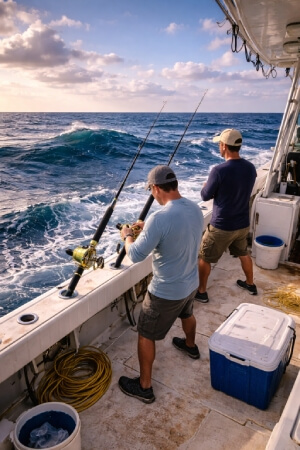
Deep-sea fishing is not for everyone. It takes time, physical effort, and a certain comfort level with open water. Being far from land is exciting for some anglers but uncomfortable for others.
Before booking an offshore trip, it helps to be honest with yourself. The points below give a realistic picture.
You enjoy long days on the water
Deep-sea trips are not quick outings. If you believe that good things take time, this style of fishing may suit you well.
You are comfortable with rougher conditions
Waves, wind, and sun exposure are part of the experience. Offshore fishing is not always smooth sailing.
You like physical challenges
Fighting large fish can be demanding. Sometimes it is a real test of strength and patience.
You are curious and willing to learn
Offshore fishing involves new techniques and equipment. Those who learn as they go often enjoy it most.
For many anglers, a guided trip is the best way to test the waters before going all in.
You leave a deep-sea fishing trip with a unique experience. Excitement and fever for adventure go far beyond the shoreline. Fishing in deep blue waters combines strategy, physical effort, and patience in a constantly changing environment.
If you are ready for the challenge and count yourself among those willing to prepare and adapt, offshore fishing gives you goosebumps, challenges, and rewards that few other fishing styles can match. Every trip is different, and that unpredictability is part of its appeal.